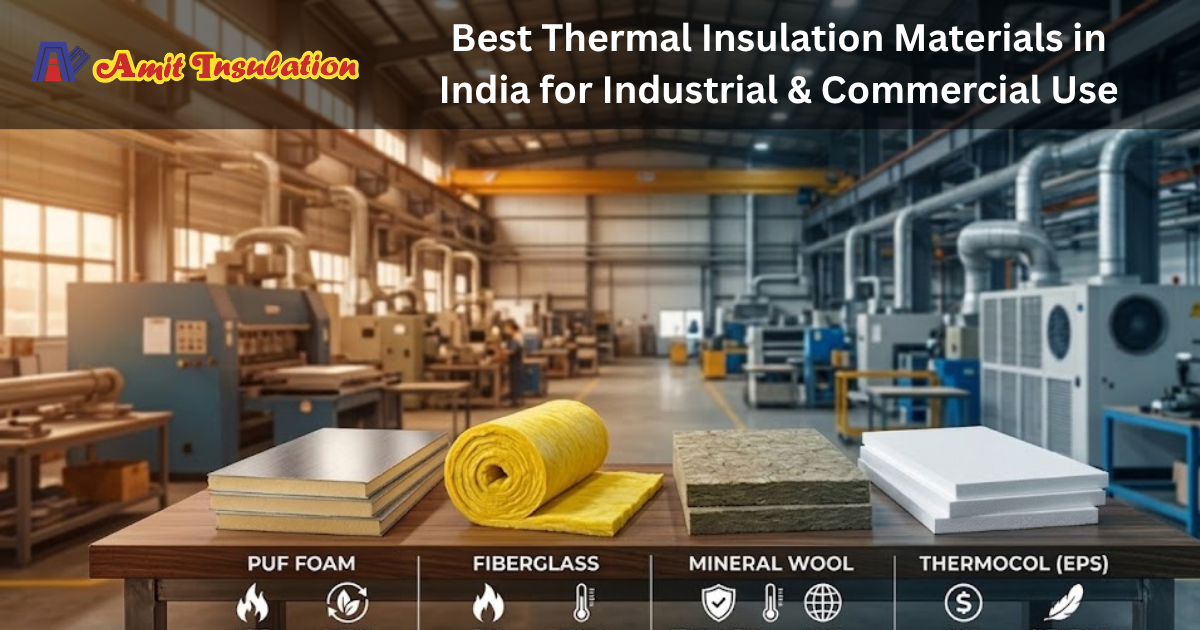
In today’s competitive industrial environment, businesses are constantly looking for ways to reduce energy costs and improve operational efficiency. One of the most effective solutions is investing in high-quality Thermal insulation materials India.
When it comes to sourcing high-quality products, choosing a reliable and experienced manufacturer plays a crucial role in achieving long-term efficiency and performance. At Amit Insulation, we specialize in delivering advanced insulation solutions tailored for diverse industrial and commercial needs.
What Are Thermal Insulation Materials?
Thermal insulation materials are specially designed substances that reduce heat transfer between surfaces. These materials help maintain temperature, whether it’s keeping heat inside or preventing it from entering.
In India’s diverse climate conditions, using the right Thermal insulation materials India is essential for maintaining efficiency in both industrial and commercial spaces.
Importance of Thermal Insulation in India
The growing adoption of Thermal insulation materials India is driven by several important factors:
Key Benefits:
- Reduces energy consumption
- Minimizes heat loss or gain
- Improves equipment performance
- Enhances indoor comfort
- Supports sustainability goals
Industries across India are now prioritizing this to achieve long-term cost savings and operational efficiency.There are various types of materials available, each suitable for specific applications.
Common Thermal Insulation Materials in India
| Material Type | Temperature Range | Applications | Key Benefits |
| Glass Wool | Up to 250°C | HVAC, ducts, walls | Lightweight, affordable |
| Rock Wool | Up to 750°C | Boilers, furnaces | Fire-resistant, durable |
| PUF (Polyurethane Foam) | Up to 150°C | Cold storage, panels | High efficiency, moisture resistant |
| Ceramic Fiber | Up to 1200°C | Kilns, high-temp equipment | Excellent heat resistance |
| EPS (Polystyrene) | Up to 80°C | Roofing, wall insulation | Cost-effective, easy to install |
Applications of Thermal Insulation Materials India
Use of these materials spans across multiple industries and commercial sectors.
Industry-Wise Applications
| Industry | Application Area | Suitable Materials |
| Manufacturing | Boilers, pipelines | Rock Wool, Ceramic Fiber |
| Food Industry | Refrigeration, cold storage | PUF Panels |
| Construction | Walls, roofs | EPS, Glass Wool |
| Power Plants | Turbines, ducts | Rock Wool |
| Commercial Buildings | HVAC systems | Glass Wool, PUF |
Key Factors to Consider – Selecting the right materials requires careful evaluation of several factors.
Important Considerations:
- Temperature Resistance
Ensure the material can handle required temperature levels. - Thermal Conductivity
Lower values indicate better insulation performance. - Moisture Resistance
Important for humid or outdoor environments. - Fire Safety
Choose fire-resistant materials for industrial use. - Durability
Long-lasting materials reduce replacement costs.
Comparison of Insulation Materials
| Feature | Glass Wool | Rock Wool | PUF | Ceramic Fiber |
| Cost | Low | Medium | High | High |
| Fire Resistance | Medium | High | Medium | Very High |
| Thermal Efficiency | Good | Excellent | Excellent | Excellent |
| Lifespan | Medium | High | High | Very High |
- Benefits of Using Thermal Insulation Materials India – Using high-quality offers numerous advantages:
- Energy Efficiency – Reduces energy consumption by maintaining temperature.
- Cost Savings – Lower electricity bills and maintenance expenses.
- Environmental Benefits – Supports eco-friendly and sustainable practices.
- Improved Safety – Minimizes risks of overheating and fire hazards.
Industrial vs Commercial Insulation Needs
The requirements for Thermal insulation materials India differ between industrial and commercial applications.
Industrial vs Commercial Use
| Factor | Industrial Use | Commercial Use |
| Temperature Range | High | Moderate |
| Material Type | Rock Wool, Ceramic Fiber | Glass Wool, EPS |
| Purpose | Equipment protection | Comfort & efficiency |
| Budget | Medium | Cost-sensitive |
Eco-Friendly Thermal Insulation Materials India
Sustainability is becoming a key focus in modern industries. Many businesses now prefer eco-friendly Thermal insulation materials India.
Popular Options:
- Recycled glass wool
- Natural fiber insulation
- Low-emission foam materials
These materials not only reduce carbon footprint but also enhance brand reputation.
Common Mistakes to Avoid
When selecting these, avoid these common errors:
- Choosing the cheapest option without quality check
- Ignoring environmental conditions
- Improper installation
- Not consulting experts
Future Trends in Thermal Insulation India
The market is rapidly evolving with innovations such as:
- Smart insulation systems
- Nano-insulation technology
- High-performance composite materials
These advancements are improving efficiency and durability across industries.
Choosing the Right Supplier in India
Selecting a reliable supplier is as important as choosing the right material. A trusted manufacturer ensures:
- Consistent product quality
- Technical expertise
- Customized solutions
- Timely delivery
For businesses looking to invest in Thermal Insulation Materials India, partnering with an experienced supplier can make a significant difference.
Conclusion
The demand is growing rapidly as industries and commercial sectors prioritize energy efficiency and sustainability. From glass wool to advanced ceramic fibers, choosing the right material can significantly impact performance, safety, and cost savings.
By understanding your requirements and evaluating available options, you can select the Best thermal insulation materials India for industrial & commercial use and ensure long-term benefits for your business.
FAQs
Q.1 What are the most commonly used thermal insulation materials India?
Glass wool, rock wool, PUF panels, and ceramic fiber are widely used.
Q.2 Which material is best for high-temperature insulation?
Ceramic fiber and rock wool are ideal for high-temperature environments.
Q.3 Are thermal insulation materials cost-effective?
Yes, they significantly reduce energy consumption and operational costs.
Q.4 Where can I find reliable suppliers?
You should choose experienced and reputed manufacturers for the best results.