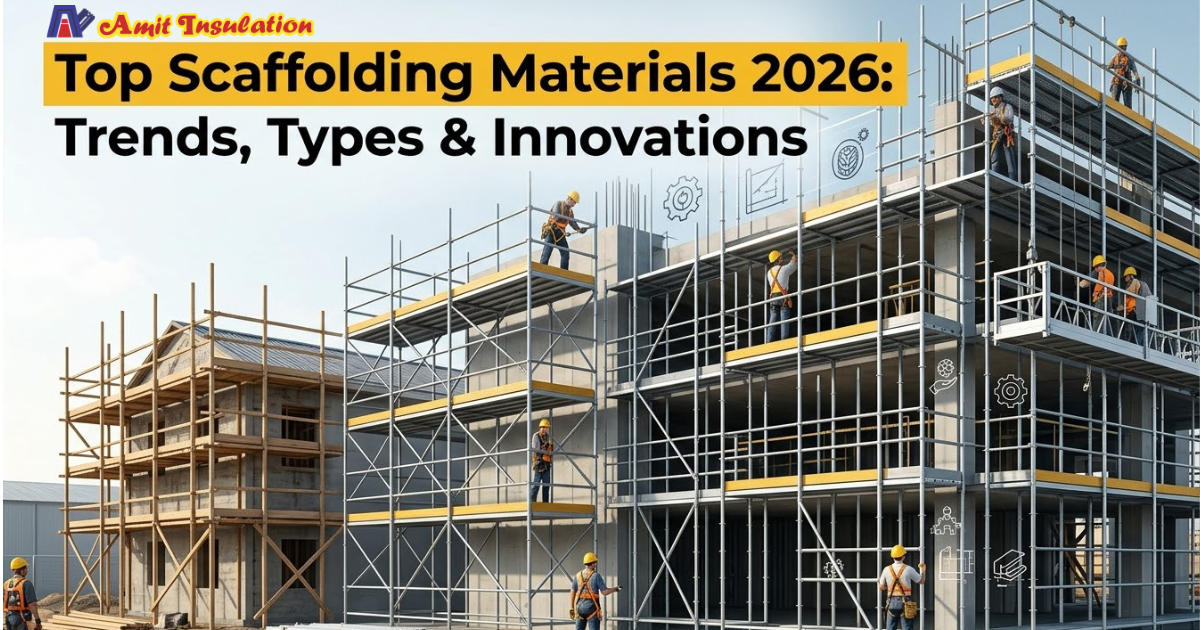
The global scaffolding market reached $63.47 billion in 2026, up from $59.63 billion in 2025, with a CAGR of 6.4%. Growth stems from booming infrastructure in Asia-Pacific and MENA regions, plus rising high-rise projects. Modular systems like ringlock and kwikstage lead demand due to quick assembly and adaptability. Lightweight materials now dominate, reducing labor costs by up to 30% on sites. Safety regulations worldwide push innovations, with IoT integration projected to cut accidents by 25%.
| Market Metric | 2025 Value | 2026 Value | CAGR to 2030 |
|---|---|---|---|
| Global Size | $59.63B | $63.47B | 6.1% |
| Accessories | N/A | N/A | 8.1% (to $16.3B) |
| Key Driver | High-rise | Modular | IoT Safety |
Traditional Scaffolding Materials Types
Scaffolding Materials Steel remains the backbone, offering unmatched strength for heavy-duty projects like bridges and skyscrapers. It supports loads over 4,000 lbs per square foot but weighs more, increasing transport costs. Aluminum scaffolds shine in portability, at one-third steel’s weight, ideal for indoor renovations. Corrosion resistance extends lifespan in humid climates. Wood, though declining, suits temporary rural builds due to low cost, but fire risks limit use.
| Material | Strength (psi) | Weight (lbs/sq ft) | Cost ($/ton) | Best Use |
|---|---|---|---|---|
| Steel | 50,000+ | 40-50 | 800-1,200 | Heavy Duty |
| Aluminum | 40,000 | 15-20 | 2,000-3,000 | Portable |
| Wood | 5,000-10,000 | 10-15 | 300-500 | Temporary |
Advanced Material Innovations
Fiberglass-Reinforced Plastic (FRP) surges in 2026 for non-conductive properties, perfect for oil, gas, and electrical sites. It’s 75% lighter than steel, corrosion-proof, and withstands chemicals.
High-strength aluminum alloys now match steel loads at reduced weight, cutting setup time by 40%. Composites like carbon fiber offer 5x strength-to-weight ratio for urban high-rises.
Engineered plastics emerge in modular systems, blending durability with recyclability for green builds.
| Innovation | Key Benefit | Load Capacity | Industry Fit |
|---|---|---|---|
| FRP | Non-conductive | 3,000 psi | Oil & Gas |
| Carbon Fiber | Ultra-light | 600,000 psi | High-Rise |
| Al Alloys | Corrosion-free | 45,000 psi | Renovations |
2026 Top Trends
Modular scaffolding grows 15% yearly, with ringlock systems favored for versatility in complex projects. Hybrid setups combine frames, towers, and jacks for multi-use sites.
Sustainability drives recycled steel and biodegradable polymers, aligning with global net-zero goals. Lightweight trends reduce emissions by 20% in logistics. AI safety monitoring and IoT sensors predict failures, mandatory in Europe by late 2026.
Safety Enhancements
Self-retracting lifelines integrate into frames, boosting OSHA compliance without workflow halts. Corrosion-resistant coatings on steel extend life by 50%.
Rapid-deploy systems assemble in hours, slashing risks in dynamic sites. FRP’s non-sparking nature prevents 90% of electrical incidents.
| Safety Feature | Risk Reduction | Adoption Rate 2026 |
|---|---|---|
| IoT Sensors | 25% | 40% of projects |
| Lifelines | 35% falls | 60% frames |
| FRP Non-spark | 90% shocks | Oil/Gas 80% |
Regional Spotlights
Asia-Pacific leads with 45% market share, fueled by India’s infrastructure boom—scaffolding demand up 12%. China exports advanced ringlock globally.
North America focuses on urban retrofits, adopting 30% more composites.
| Region | Market Share | Growth Driver | Top Material |
|---|---|---|---|
| Asia-Pac | 45% | Infra Boom | Steel/Modular |
| MENA | 20% | Mega-Projects | Aluminum |
| N. America | 15% | Retrofits | Composites |
Future Innovations Ahead
Robotics automate assembly by 2027, with drones inspecting scaffolds. Smart materials self-heal micro-cracks, promising 2x lifespan.
3D-printed custom components cut waste 40%. Expect biodegradable hybrids for eco-regulations.
Rental models surge to 70%, optimizing costs for SMEs.
Types Deep Dive
Frame Scaffolding: Rugged for masonry; 2026 upgrades include welded alloys.
Rolling Towers: Mobile for indoors; aluminum versions roll 50% easier.
Pump Jack: Cost-effective for homes; hybrids add modularity.
Ringlock: Versatile, load-bearing up to 1,500 lbs/sq m; 2026 standard.
Cuplock: Fast setup; steel dominant but FRP variants emerge.
| Type | Assembly Time | Max Height | Cost Efficiency |
|---|---|---|---|
| Ringlock | 1-2 hrs/10m | 50m | High |
| Cuplock | 45 min/10m | 40m | Medium-High |
| Frame | 2-3 hrs/10m | 30m | Medium |
Material Comparisons Expanded
Steel: Dominant at 60% market; recyclable but rust-prone without coatings.
Aluminum: 25% share; recyclable, but higher upfront cost.
FRP/Composites: 10% and rising; premium pricing offsets longevity.
Hybrids blend steel-FRP for balanced performance.
| Property | Steel | Aluminum | FRP | Carbon Fiber |
|---|---|---|---|---|
| Weight | Heavy | Light | Very Light | Ultra Light |
| Durability | High | High | Excellent | Superior |
| Cost | Low | Medium | High | Very High |
| Eco-Score | Good | Excellent | Good | Emerging |
Sustainability Focus
Recycled content hits 50% in new steel scaffolds. Polymers from bio-sources reduce carbon footprint 35%.
Life-cycle assessments favor aluminum for reuse. Regulations mandate 20% green materials by 2027.
Case Studies 2026
India’s bridge projects use ringlock, saving 25% time.[ from prior]
UAE towers deploy FRP, zero corrosion in saline air.
US retrofits adopt hybrids, cutting weights 40%.
| Factor | Check For | Red Flags |
|---|---|---|
| Certification | OSHA/ANSI | None |
| Weight Rating | 4x safety | Under-spec |
| Supplier | Local stock | Long leads |
Conclusion
The scaffolding industry in 2026 is transforming rapidly — from traditional steel and aluminum to advanced FRP, carbon fiber, and IoT-enabled smart systems. With the global market reaching $63.47 billion, the shift is not just about size, but about intelligence, sustainability, and safety. The right scaffolding material always depends on your project — steel for heavy-duty builds, aluminum for portability, FRP for electrical hazard zones, and carbon fiber for high-rise urban projects. The common thread in 2026 is a clear move toward modular, greener, and smarter solutions that lower total cost of ownership. At Amit Insulation, we help you stay ahead of these trends — so you can build smarter, safer, and more efficiently.