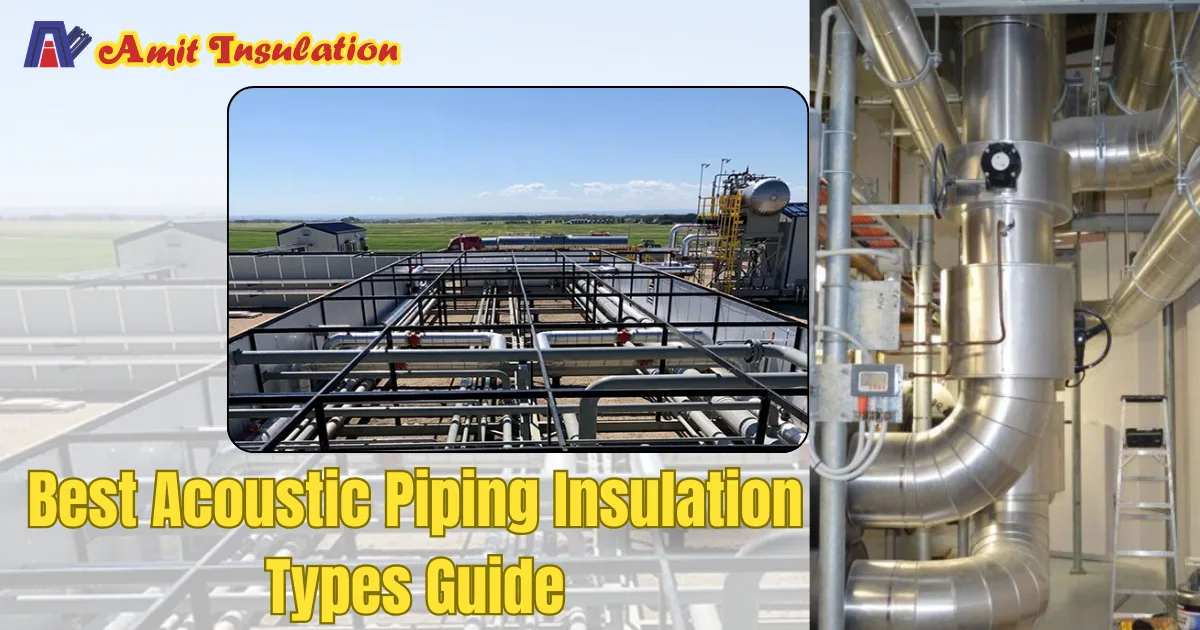
Acoustic piping insulation reduces noise from pipes in homes, factories, and buildings by absorbing vibrations and blocking sound transmission. This guide covers the top types of acoustic piping insulation, including acoustic pipe lagging options, with up-to-date facts from 2026 standards.
Why Acoustic Piping Insulation Matters
Noisy pipes cause disturbances from water flow, steam, or HVAC systems. Acoustic piping insulation, often called acoustic pipe lagging, wraps pipes to dampen sound effectively.
It improves comfort in residential areas and meets industrial noise regulations like ISO 15665:2023, which rates insulation in classes A, B, and C for pipes up to 1m diameter. Using high-quality acoustic piping insulation cuts energy costs too, by combining noise control with thermal benefits.
Types of Acoustic Piping Insulation
Several materials excel in acoustic piping insulation. Key types include mineral wool, fiberglass, rubber foam, and composites like mass-loaded vinyl.
Mineral Wool (Rockwool)
- Mineral wool, or rockwool, tops lists for acoustic pipe lagging due to its dense fibers that trap sound waves.
- Rockwool withstands temperatures up to 250°C, offers fire resistance (Class O), and has low thermal conductivity of 0.033 W/mK.
- Products like Rockwool Pipe Insulation with aluminum foil facing provide vapor barriers and self-adhesive laps for easy install.
- In industrial settings, iNSpira-Tube uses rockwool cores with polymeric membranes for high noise reduction on steam pipes.
Fiberglass Insulation
- Fiberglass suits acoustic piping insulation for its lightweight snap-fit sections and sound absorption.
- Isover Climpipe Fibreglass features aluminum facing for fire safety and up to 70% recycled content, ideal for HVAC pipes.
- It irritates skin during handling but excels in non-combustible acoustic pipe lagging when vapor-sealed.
Rubber Foam (Nitrile Rubber)
- Rubber foam provides flexible acoustic pipe lagging with closed-cell structure blocking moisture and noise.
- Armaflex and K Flex nitrile rubber handle -50°C to +110°C, resist mold, and include Microban protection.
Phenolic Foam Insulation
Composite Acoustic Lagging
- Composites like INS Acousti-Lag combine foam, mass vinyl, and foil for broadband noise control.
- Luxury Liner Pro fuses MLV with closed-cell foam for 1.25 lbs/sq ft mass, blocking low frequencies.
Key Properties
| Type | Sound Absorption (dB) | Thermal Conductivity (W/mK) | Fire Rating | Max Temp (°C) | Cost (Relative) |
|---|---|---|---|---|---|
| Mineral Wool | High (up to 52) | 0.033 | Class O | 250 | Medium |
| Fiberglass | Medium-High | 0.035 | Non-combustible | 450 | Low |
| Rubber Foam | Medium | 0.034 | Class O | 110 | Medium |
| Phenolic Foam | Medium | 0.025 | BL-s1,d0 | 140 | High |
| Composites | Very High | Varies | Class A | 90-250 | High |
This table shows mineral wool leading in acoustics for acoustic piping insulation.
Standards and Performance Metrics
- ISO 15665:2023 updates guide acoustic piping insulation with classes A-C based on transmission loss tests.
- Class A demands highest performance for large pipes; porous materials with spacers cut moisture and improve scores.
Installation Guide for Acoustic Pipe Lagging
- Secure with tie-wire or bands; stagger joints. Apply foil jackets with sealant like Foster’s 95-44.
- Companies like Amit Insulation in Vadodara offer expert installation for acoustic piping insulation projects.
Applications Across Industries
Maintenance and Longevity
- Inspect yearly for damage; replace degraded sections. Mineral wool resists rot; rubber needs chemical checks.
Cost-Benefit Analysis
| Pipe Size (inch) | Mineral Wool Cost/m ($/m) | Noise Reduction (dB) | Energy Savings (%) |
|---|---|---|---|
| 2 | 5-8 | 20-30 | 15-25 |
| 6 | 12-18 | 30-45 | 20-35 |
| 12 | 25-40 | 40-52 | 25-40 |
Savings pay back in 2-5 years.
Emerging Trends in 2026
Case Studies
Types of Acoustic Piping Insulation Deep Dive
| Sub-Type | Best Use Case | Pros | Cons |
|---|---|---|---|
| Rockwool Lamella | High-temp pipes | Fireproof, high NRC | Heavier |
| MLV-Foam Composites | Low-freq noise | Blocks transmission | Thicker |
| Self-Adhesive Rubber | DIY plumbing | Easy install | Lower temp limit |
Advanced Selection Factors
Why Choose Amit Insulation
Amit Insulation stands out as a trusted leader in acoustic piping insulation solutions, offering expert services tailored for Indian climates and diverse projects. With a strong presence in Vadodara and nationwide reach, they specialize in types of acoustic piping insulation and acoustic pipe lagging, ensuring noise reduction, thermal efficiency, and compliance with standards like ISO 15665. Their team customizes acoustic piping insulation installations, from residential drainage pipes to heavy industrial steam lines. Amit Insulation uses premium materials like Rockwool and rubber foam, combined with skilled labor for seamless acoustic pipe lagging that lasts 20-50 years with minimal maintenance.
Conclusion
Selecting the right acoustic piping insulation transforms noisy environments into serene ones, with types of acoustic piping insulation like mineral wool and composites leading the way. Acoustic pipe lagging ensures durability and performance across applications. Partner with Amit Insulation for expert implementation and lasting results.
FAQs
What is acoustic piping insulation?
Material wrapping pipes to reduce sound transmission from flow or vibration.
What are main types of acoustic piping insulation?
Mineral wool, fiberglass, rubber foam, phenolic, composites.
What is acoustic pipe lagging?
Flexible wraps like foil-faced rockwool for easy pipe noise reduction.
Which is best for high noise?
Composites or dense mineral wool achieve 50+dB cuts.
How to install acoustic pipe lagging?
Cut, overlap 75mm, secure, seal; pros like Amit Insulation recommended.