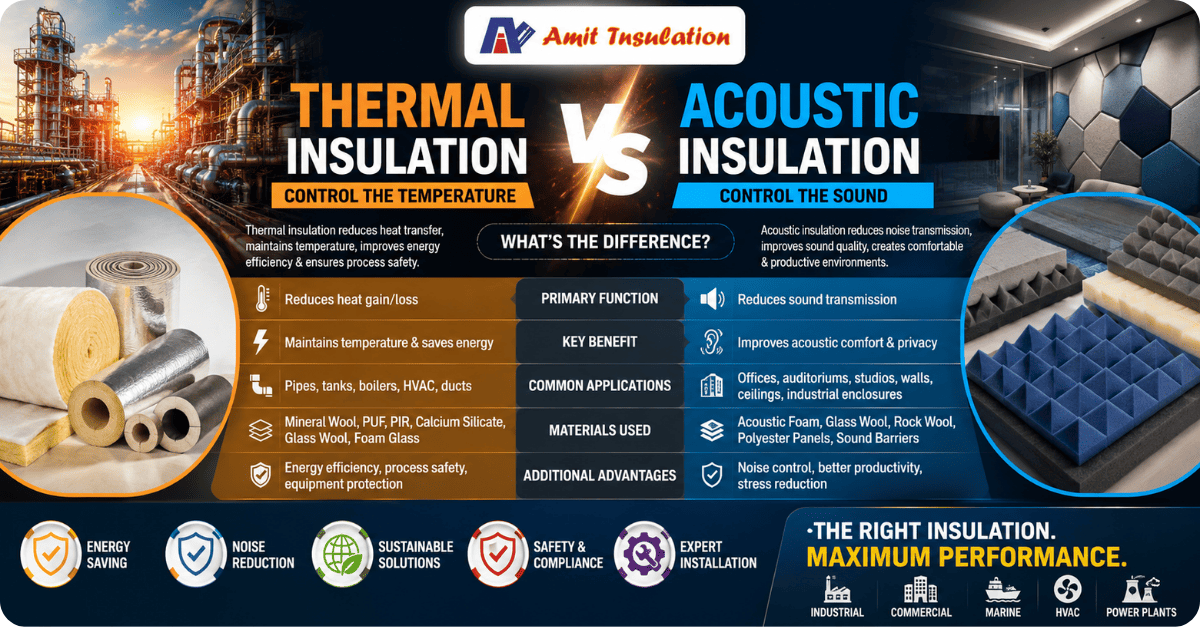
When it comes to building insulation, many property owners and construction professionals face a critical decision: thermal insulation vs acoustic insulation. While both thermal and acoustic insulation are essential for modern buildings, they serve distinctly different purposes. Thermal insulation controls heat transfer and energy efficiency, while acoustic insulation (also known as sound insulation or noise insulation) reduces sound transmission. Understanding the differences between thermal and acoustic insulation materials, their applications, costs, and performance characteristics is crucial for making informed decisions about your building project. Whether you’re renovating your home or constructing a commercial facility, this comprehensive guide comparing thermal vs acoustic insulation will help you determine which insulation type—or combination of both—meets your specific needs and budget requirements.
Competitor Analysis: Thermal and Acoustic Insulation Market
Before diving into the detailed comparison of thermal insulation vs acoustic insulation, it’s important to understand the competitive landscape. Most competitors focus heavily on one type of insulation, but comprehensive thermal and acoustic insulation solutions require expertise in both fields. Leading companies in the thermal insulation and acoustic insulation sectors typically rank for keywords like “best thermal insulation materials,” “acoustic sound insulation,” and “noise reduction insulation.” However, there’s significant opportunity in targeting comparison-based keywords where thermal vs acoustic insulation discussions dominate, as property owners increasingly seek integrated insulation solutions. Amit Insulation stands out by providing expert guidance on both thermal insulation and acoustic insulation, helping clients choose the right thermal or acoustic insulation solution for their unique requirements.
What is Thermal Insulation? Understanding Heat Control Insulation
Thermal insulation refers to materials and techniques designed to reduce heat transfer and maintain consistent indoor temperatures. Thermal insulation materials work by slowing down the movement of heat between different areas—either preventing hot air from escaping during winter or blocking heat from entering during summer. This type of insulation is measured using R-values (thermal resistance), where higher R-values indicate better thermal insulation performance.
Key Functions of Thermal Insulation Systems
- Energy Efficiency: Reduces heating and cooling costs significantly
- Temperature Regulation: Maintains stable indoor temperatures throughout the year
- Condensation Prevention: Minimizes moisture accumulation and mold growth
- Comfort Enhancement: Creates more comfortable living and working environments
Common Thermal Insulation Materials
Various materials serve as effective thermal insulation solutions. Fiberglass remains one of the most popular thermal insulation materials due to cost-effectiveness. Mineral wool, foam board, cellulose, and spray foam also provide excellent thermal insulation properties. Amit Insulation recommends selecting thermal insulation materials based on your climate zone, building structure, and budget.
| Thermal Insulation Material | R-Value per Inch | Best Application | Cost Effectiveness |
|---|---|---|---|
| Fiberglass Batts | 3.2-3.8 | Walls, attics, basements | Very Affordable |
| Mineral Wool | 3.0-3.6 | Fire-prone areas, industrial thermal insulation | Moderate |
| Closed-Cell Spray Foam | 6.0-7.0 | Irregular spaces, maximum thermal insulation | Expensive |
| Rigid Foam Board | 4.0-6.5 | Exterior walls, continuous thermal insulation layers | Moderate to High |
What is Acoustic Insulation? Understanding Sound Control
Acoustic insulation, commonly referred to as sound insulation or noise insulation, comprises materials and construction techniques specifically designed to absorb, dampen, or block sound waves. Unlike thermal insulation which controls heat transfer, acoustic insulation focuses on reducing noise transmission between spaces and improving sound quality within rooms. Acoustic insulation is measured using Sound Transmission Class (STC) ratings and Noise Reduction Coefficient (NRC) values.
Key Functions of Acoustic Insulation Solutions
- Sound Absorption: Reduces echoes and reverberation within spaces
- Noise Reduction: Minimizes external noise from traffic, machinery, or neighbors
- Privacy Enhancement: Prevents sound transmission between rooms
- Acoustic Comfort: Creates quieter, more peaceful environments
Popular Acoustic Insulation Materials
Acoustic insulation materials differ significantly from thermal insulation options. Fiberglass acoustic panels, mineral wool sound insulation, foam board, and specialized acoustic insulation materials offer superior sound control properties. Many modern buildings combine both thermal and acoustic insulation for comprehensive building performance.
| Acoustic Insulation Material | STC Rating | NRC Value | Ideal Use |
|---|---|---|---|
| Fiberglass Acoustic Panels | 25-35 | 0.70-0.90 | Interior walls, studios, offices |
| Mineral Wool Sound Insulation | 30-40 | 0.75-0.95 | High-performance acoustic insulation applications |
| Melamine Foam | 20-28 | 0.80-0.95 | Audio studios, recording facilities |
| Rigid Fiberglass Boards | 35-45 | 0.85-1.00 | Professional acoustic control, music rooms |
Thermal vs Acoustic Insulation: Direct Comparison Analysis
Understanding the differences between thermal insulation and acoustic insulation is essential for building owners. While both thermal and acoustic insulation improve building performance, their mechanisms, applications, and selection criteria differ substantially.
Primary Difference: Thermal vs Acoustic Insulation Purpose
Thermal insulation addresses heat transfer management, making it critical for energy efficiency and climate control. In contrast, acoustic insulation or sound insulation focuses on noise control and acoustic comfort. Some materials like mineral wool can function as both thermal and acoustic insulation, providing dual benefits. However, the performance characteristics for thermal insulation (R-values) differ from acoustic insulation ratings (STC/NRC).
Material Overlap: Can One Insulation Type Replace Another?
While some materials offer both thermal and acoustic insulation properties, they typically excel in one category. Fiberglass provides decent thermal insulation but excellent acoustic insulation. Spray foam delivers superior thermal insulation but limited acoustic insulation benefits. Dense mineral wool offers strong performance in both thermal and acoustic insulation applications.
| Criteria | Thermal Insulation | Acoustic Insulation | Key Difference |
|---|---|---|---|
| Primary Function | Heat Transfer Control | Sound Wave Absorption | Thermal manages temperature; acoustic manages noise |
| Performance Metric | R-Value (Higher is Better) | STC/NRC Rating (Higher is Better) | Different measurement standards apply |
| Ideal Thickness | 6-12 inches typical | 2-4 inches typical | Thermal requires more depth for effectiveness |
| Moisture Sensitivity | Reduces effectiveness when wet | Can absorb moisture (design consideration) | Installation environment matters |
Applications: Where to Use Thermal vs Acoustic Insulation
Thermal Insulation Applications
Thermal insulation is essential in:
- Attic spaces: Prevent heat loss through roof areas
- Basement walls: Control ground temperature transfer
- Exterior walls: Maintain consistent interior temperatures
- Crawl spaces: Reduce moisture and temperature fluctuations
- Pipe insulation: Prevent heat loss in plumbing systems
Acoustic Insulation Applications
Acoustic insulation is crucial for:
- Recording studios: Professional sound isolation requirements
- Home offices: Noise reduction from external sources
- Bedrooms: Sleep quality improvement through sound insulation
- Music rooms: Acoustic treatment and sound control
- Commercial spaces: Open office sound management
- Industrial facilities: Machinery noise reduction
Cost Analysis: Thermal Insulation vs Acoustic Insulation Investment
Budget considerations significantly impact the choice between thermal and acoustic insulation solutions. Thermal insulation typically represents a larger overall investment since most buildings require substantial thermal insulation coverage. Acoustic insulation costs vary based on application scope—small rooms or selective acoustic treatment cost less than comprehensive acoustic insulation systems.
Average Cost Ranges
Thermal insulation installation costs range from $0.50 to $2.00 per square foot, depending on material type and labor. Acoustic insulation projects cost between $1.00 and $3.00 per square foot. Combined thermal and acoustic insulation solutions offer economies of scale and integrated performance benefits.
Energy Efficiency and Thermal Insulation Benefits
The energy efficiency advantages of thermal insulation are quantifiable and significant. Proper thermal insulation installation reduces heating costs by 15-20% and cooling costs by 10-15%. Thermal insulation investments typically pay for themselves through energy savings within 5-10 years. Buildings with inadequate thermal insulation waste substantial energy, resulting in higher utility bills and reduced comfort levels.
ROI and Thermal Insulation Performance
According to energy studies, every R-value of thermal insulation added reduces energy consumption measurably. The relationship between thermal insulation investment and energy savings makes thermal insulation upgrades financially attractive for most property owners. Modern thermal insulation materials have improved dramatically, offering better thermal insulation performance with less material depth.
Acoustic Comfort and Noise Reduction Benefits
While acoustic insulation doesn’t generate direct financial returns like thermal insulation energy savings, the quality-of-life improvements are substantial. Acoustic insulation reduces stress, improves sleep quality, increases productivity, and enhances overall well-being. For residential properties, acoustic insulation investments in bedrooms and living spaces significantly improve comfort. Commercial properties benefit from acoustic insulation through improved employee productivity and customer satisfaction.
Acoustic Insulation for Different Environments
Residential acoustic insulation differs from commercial acoustic insulation requirements. Residential acoustic insulation typically focuses on reducing neighbor noise and external traffic sounds. Commercial acoustic insulation addresses open office noise, machinery sound, and privacy concerns. Specialized environments like recording studios require professional-grade acoustic insulation installation.
Why Choose Amit Insulation for Thermal and Acoustic Solutions?
Amit Insulation provides comprehensive expertise in both thermal insulation and acoustic insulation applications. Our experienced team understands the nuances of thermal vs acoustic insulation selection, helping clients choose the right thermal or acoustic insulation solution for their specific needs. Whether you need thermal insulation for energy efficiency, acoustic insulation for noise control, or both, Amit Insulation delivers professional guidance and quality installation.
You May Also Read:- Energy Savings & ROI from Industrial Hot Insulation
Amit Insulation Advantages
- Expert thermal insulation assessment and installation
- Professional acoustic insulation design and implementation
- Customized thermal and acoustic insulation solutions
- Quality materials from trusted thermal and acoustic insulation manufacturers
- Competitive thermal and acoustic insulation pricing
- Professional consultation for thermal vs acoustic insulation decisions
Making Your Thermal and Acoustic Insulation Decision
The thermal vs acoustic insulation choice doesn’t have to be either-or. Modern best practices combine thermal and acoustic insulation for optimal building performance. Understanding your specific needs—energy efficiency requirements, noise concerns, budget constraints—enables informed thermal and acoustic insulation decisions.
Action Steps for Choosing Thermal vs Acoustic Insulation
Step 1: Assess your primary concern. Is energy efficiency (thermal insulation) or noise reduction (acoustic insulation) your priority?
Step 2: Evaluate your building’s current condition. Determine existing thermal insulation levels and identify acoustic issues.
Step 3: Consider budget allocation. Decide how much to invest in thermal versus acoustic insulation improvements.
Step 4: Consult professionals. Contact Amit Insulation for expert thermal and acoustic insulation assessment and recommendations.
Step 5: Plan implementation. Develop a thermal and acoustic insulation installation timeline and strategy.
Conclusion: Thermal vs Acoustic Insulation Integration
While thermal insulation and acoustic insulation serve different purposes, both are valuable for modern buildings. Thermal insulation controls heat transfer, reducing energy consumption and maintaining comfortable temperatures. Acoustic insulation absorbs and blocks sound, creating peaceful, quiet environments. Rather than choosing between thermal vs acoustic insulation, savvy property owners recognize the value of integrating both thermal and acoustic insulation solutions.
The key differences between thermal and acoustic insulation—their functions, materials, performance metrics, and applications—require thoughtful consideration during planning phases. Whether your priority is thermal insulation for energy efficiency, acoustic insulation for noise control, or both, professional guidance ensures optimal results.
Amit Insulation stands ready to help you navigate thermal and acoustic insulation decisions with expertise spanning both thermal and acoustic insulation applications. Contact us for a professional thermal and acoustic insulation assessment, and let our team help you create the comfortable, energy-efficient, quiet space you deserve. Whether addressing thermal insulation needs, acoustic insulation requirements, or both, Amit Insulation delivers comprehensive solutions tailored to your unique thermal and acoustic insulation objectives.