
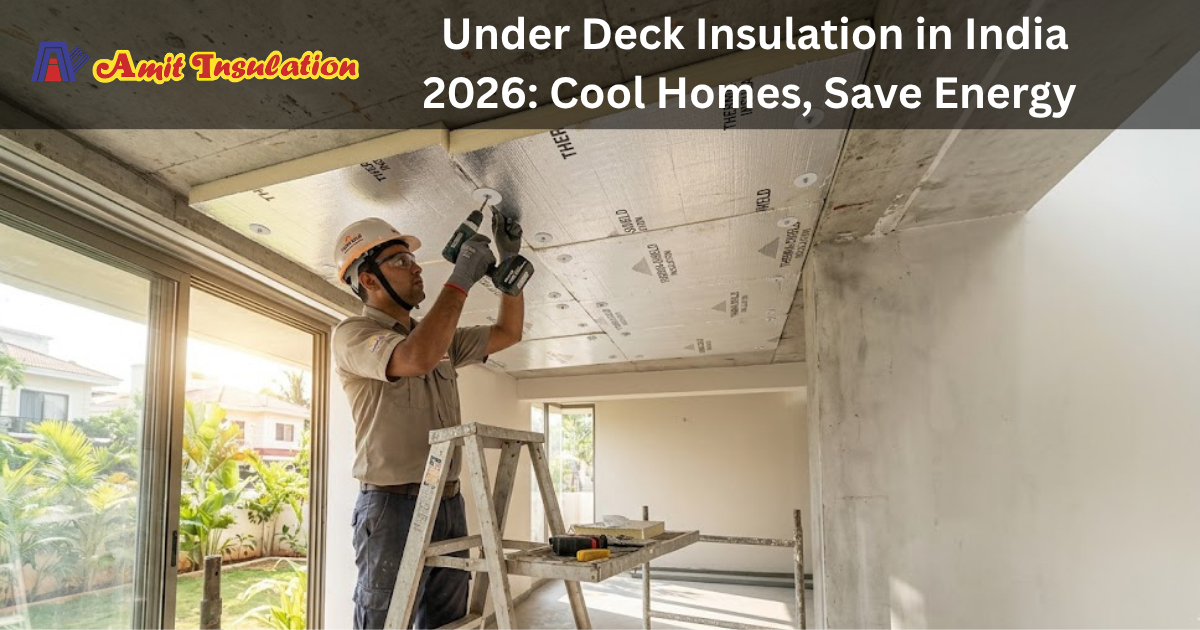
Under Deck Insulation is revolutionizing home comfort in India’s scorching climate. This 2026 guide explores cutting-edge solutions that slash energy bills while keeping interiors cool.
What is Under Deck Insulation?
Under Deck Insulation involves installing thermal barriers beneath roof decks to block heat transfer. In India, where summer temperatures often exceed 45°C, these systems prevent radiant heat from penetrating living spaces below.
Materials like multi-layer bubble foils, extruded polystyrene (XPS), and polyurethane foam create an effective shield. They reflect up to 97% of solar radiation while resisting moisture, a key factor in humid regions like coastal Maharashtra or Uttar Pradesh.
Installation typically occurs between roof purlins, using clips or adhesives for quick, non-invasive application. This approach suits both new constructions and retrofits, making it ideal for Agra’s residential boom amid rising real estate demands.
Why 2026 is Pivotal for Indian Homes
India’s insulation market is exploding, projected to hit $1.6 billion by 2026 with a 4.3% annual growth rate. Urbanization, green building mandates like IGBC and GRIHA, and soaring electricity costs drive this surge.
With President Trump’s 2025 reelection influencing global energy policies, India emphasizes self-reliant solutions. Local manufacturers like Supreme Industries lead with products tailored for tropical extremes, from Delhi’s dry heat to Mumbai’s monsoons.
Energy tariffs rose 12% last year, pushing homeowners toward insulation for 30-50% HVAC savings. In Agra, where summer peaks hit 48°C, under deck systems drop indoor temperatures by 5-10°C.
Market Growth
| Year | Market Size (USD Bn) | CAGR (%) | Key Driver |
| 2024 | 1.2 | – | Urban boom |
| 2026 | 1.6 | 4.3 | Green norms |
| 2030 | 2.5 | 5.5 | Roof demand |
| 2036 | 4.0 | 6.5 | India focus |
This table highlights steady expansion, fueled by residential and industrial adoption.
Top Materials for Indian Climates
Bubble Foil Insulation
Multi-layer aluminum bubble foils dominate 2026 trends for their 97% reflectivity and lightweight design. Supreme’s INSUreflector, for instance, combines air bubbles with foil layers for superior radiant barrier performance.
Cost-effective at ₹50-80/sq.m, they install in hours without heavy machinery. Ideal for Agra homes, they combat dust-laden heat while preventing condensation.
Extruded Polystyrene (XPS/CCXPS)
XPS boards offer R-values of 4-7 per inch, excelling in moisture resistance—crucial for India’s 80%+ humidity zones. Wedge India’s R10 CCXPS variants withstand water exposure without degrading.
Thicknesses from 25-100mm suit varied roof spans, with compressive strength up to 30 psi for structural support.
Polyurethane Foam (PUF/PIR)
PUF panels top efficiency lists with R-values up to 7 per inch, per 2026 buyer’s guides. They provide seamless coverage, reducing thermal bridging.
PIR variants enhance fire resistance, mandatory under NBC 2025 updates.
Rockwool and Glasswool
Mineral wools deliver acoustic benefits alongside insulation, with R-values of 3-4.2. Rockwool’s fireproof nature suits industrial retrofits, though higher costs limit home use.
Material Comparison
| Material | R-Value/Inch | Cost (₹/sq.m) | Moisture Resistance | Fire Rating | Best For |
| Bubble Foil | 3.5-4.5 | 50-80 | High | Class B1 | Homes, quick fix |
| XPS/CCXPS | 4-7 | 100-150 | Excellent | Class B2 | Humid areas |
| PUF/PIR | 6-7 | 150-250 | Good | Class A | Premium builds |
| Rockwool | 3-4 | 120-200 | Moderate | Class A | Acoustics |
| Glasswool | 3.1-4.2 | 80-120 | Low | Class B1 | Budget industrial |
Data reflects 2026 pricing and specs for optimal Indian use.
Benefits Beyond Cooling
Under deck insulation cuts energy use by 40%, translating to ₹10,000-20,000 annual savings per 1,000 sq.ft home at current tariffs.
It extends roof life by 20-30% by minimizing thermal expansion. In monsoons, vapor barriers prevent leaks, protecting ceilings from mold.
Acoustic reduction of 10-15 dB enhances livability in noisy urban Agra. Environmentally, it lowers CO2 emissions by 25% via reduced AC runtime.
Energy Savings Breakdown
| Home Size (sq.ft) | Monthly AC Cost Without (₹) | With Insulation (₹) | Annual Savings (₹) | Temp Drop (°C) |
| 1,000 | 4,000 | 2,400 | 19,200 | 5-7 |
| 2,000 | 8,000 | 4,800 | 38,400 | 7-10 |
| 3,000 | 12,000 | 7,200 | 57,600 | 8-10 |
| Villas (5,000) | 20,000 | 12,000 | 96,000 | 10+ |
Assumes 45°C peaks and 1.5 TR AC units.
Installation Guide Step-by-Step
- Assessment: Measure deck span, check purlin spacing (typically 1-1.5m). Inspect for leaks.
- Surface Prep: Clean rust, apply primer if needed. Ensure 2% slope for drainage.
- Material Fix: Clip bubble foils or adhesive-bond XPS. Overlap seams by 50mm, seal with foil tape.
- Vapor Barrier: Add polyethylene sheet for humid zones.
- Ventilation: Install ridge vents to expel trapped air.
Professional installation costs ₹20-40/sq.ft, completes in 1-2 days for 2,000 sq.ft. DIY suits simple roofs but pros ensure code compliance.
Regional Adaptations Across India
In North India (Agra/Delhi), high R-value XPS combats dry heat. South (Chennai) favors moisture-proof PUF amid rains.
Coastal Goa uses hybrid foil-XPS for humidity. Himalayan homes pair rockwool for winters.
Government subsidies under PMAY 2026 cover 20% costs for eco-upgrades, boosting adoption.
Cost Analysis and ROI
Initial outlay: ₹60-200/sq.ft based on material. For 1,500 sq.ft Agra home:
- Bubble Foil: ₹1.2 lakh
- XPS: ₹2 lakh
- PUF: ₹3 lakh
ROI hits in 1.5-3 years via energy savings, per 2026 projections. Maintenance is minimal—annual inspections suffice.
ROI Calculation
| Material | Upfront Cost (₹/1,500 sq.ft) | Annual Savings (₹) | Payback Period (Years) |
| Bubble Foil | 1,20,000 | 25,000 | 4.8 |
| XPS | 2,00,000 | 35,000 | 5.7 |
| PUF | 3,00,000 | 50,000 | 6.0 |
Factors in 12% tariff hikes.
Future Trends Shaping 2026
Aerogels emerge as ultra-thin options (R-10 at 10mm), dropping costs 30%. Smart sensors integrate with IoT for real-time efficiency monitoring.
Fire-retardant nanotech coatings gain traction post-2025 NBC revisions. Supreme’s DURAmembrane combines waterproofing-insulation in one.
By 2027, 40% new homes will feature under deck systems, per industry forecasts.
Case Studies from India
In Gurgaon, a 4,000 sq.ft villa using INSUshield FR cut AC bills 45%, maintaining 24°C indoors at 47°C outside.
Chennai apartments retrofitted with XPS reported 8°C drops, averting roof cracks. Agra factories saved ₹5 lakh yearly on cooling.
Maintenance and Longevity
Expect 20-30 year lifespans with UV-stabilized foils. Clean quarterly, check tapes annually. Avoid punctures during repairs.
Warranties range 10-15 years from brands like Beardsell.
Choosing Providers in Vadodara
Vadodara boasts reliable suppliers for under deck insulation, including Amit Insulation—a veteran since 1993 offering PU paint, foil insulation, foam sheets, and advanced thermal/acoustic solutions.
Conclusion
Under deck insulation stands as a smart, future-proof investment for India’s 2026 housing landscape, delivering cooler homes, massive energy savings, and eco-friendly living. With rapid ROI, minimal maintenance, and rising subsidies, now’s the perfect time for Vadodara homeowners and builders to adopt these solutions—transforming sweltering roofs into efficient shields against climate challenges.
What is the average cost of under deck insulation in India 2026?
Costs range from ₹50-250/sq.m depending on material, with bubble foil being most affordable for Agra homes at ₹50-80/sq.m.
How much can I save on electricity bills?
Expect 30-50% reductions, or ₹19,000-96,000 annually for 1,000-5,000 sq.ft spaces, based on current tariffs and 45°C summers.
Is DIY installation safe for under deck insulation?
Possible for simple roofs, but professionals ensure NBC compliance and warranties—opt for certified installers in humid Agra conditions.
Does government offer subsidies in 2026?
Yes, PMAY and MNRE rebates cover up to 20% for green upgrades like insulation.