Gujarat’s most Trusted Industrial Insulation Contractor — 30+ years of proven performance across petrochemical, power, pharmaceutical, and food-processing sectors.
At Amit Insulation, we provide professional Hot & Cold Insulation solutions that help industries reduce energy loss, maintain temperature control, and protect vital systems. With over 30 years of trusted service, we have become a preferred partner for clients across sectors like chemical, pharmaceutical, food processing, and more.
Hot insulation is applied to surfaces operating above ambient temperature — typically pipelines, boilers, heat exchangers, and steam lines. It reduces heat loss, prevents surface burns, conserves fuel energy, and maintains process temperatures essential to plant efficiency. Our hot insulation solutions handle temperatures from 60°C up to 1200°C.
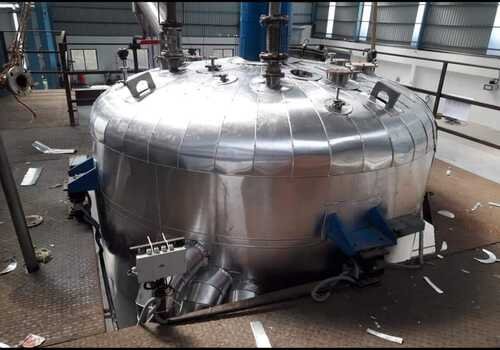
Cold insulation is applied to surfaces below ambient temperature — chillers, LNG storage, cold water pipelines, and refrigeration systems. It prevents condensation, controls vapour ingress, eliminates energy loss, and protects equipment integrity. Our cold insulation systems operate reliably from ambient down to −40°C.
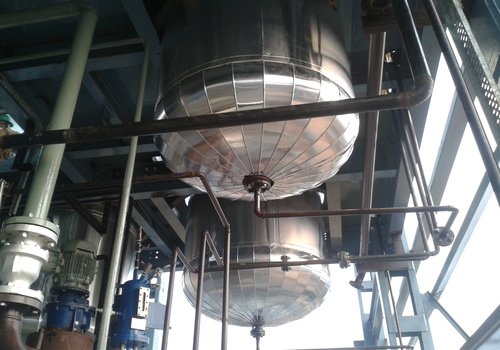
Hot & Cold Insulation is a critical industrial process that controls heat transfer across pipelines, vessels, tanks, ducts, and equipment. Whether you need to retain heat in high-temperature process lines or prevent moisture gain and condensation in sub-zero refrigeration systems, the right insulation system saves energy, ensures safety, and extends the lifespan of your industrial assets.
At Amit Insulation — Vadodara’s leading insulation contractor — we provide comprehensive Hot & Cold Insulation Services in Vadodara, Gujarat, and across India. Our solutions are engineered to operate reliably from −40°C to +1200°C, covering every thermal insulation demand in modern industry.
Parameter | Hot Insulation | Cold Insulation |
Purpose | Retain process heat, reduce surface temperature | Prevent heat ingress, control condensation |
Operating Temperature | +60°C to +1200°C | −40°C to Ambient |
Primary Materials Used | Mineral Wool, Rock Wool, Ceramic Fibre, LRBM, Refractory Castable | Polyurethane Foam (PUF), Elastomeric Foam, EPS, PIR Boards |
Vapour Barrier Needed? | Not typically required | Yes — critical to prevent moisture ingress |
Cladding / Finish | Aluminium Sheet, GI Sheet, Stainless Steel | Aluminium Sheet, PVC Jacketing, HDPE Cladding |
Energy Savings | Reduces fuel/steam consumption by 20–40% | Reduces cooling energy losses by 25–45% |
Key Risk Without Insulation | Heat loss, process inefficiency, burn hazard | Condensation, corrosion under insulation (CUI), energy waste |
Common Applications | Boilers, steam pipelines, furnaces, heat exchangers | Chilled water lines, cold storage, LNG tanks, refrigeration ducts |
Material | Type | Temperature Range | Best Application | Key Advantage |
Rock Wool / Mineral Wool | Hot | Up to 750°C | Pipelines, boilers, steam lines | High-temperature resistance, cost-effective |
Ceramic Fibre Blanket | Hot | Up to 1400°C | Furnaces, kilns, refractory lining | Extreme temperature tolerance, lightweight |
LRBM (Lightly Resin Bonded Matts) | Both | −20°C to 500°C | Pipes, vessels, tanks | Flexible, easy application, low thermal conductivity |
Polyurethane Foam (PUF) | Cold | −40°C to 110°C | Cold storage, chilled pipelines | Excellent vapour barrier, closed-cell structure |
Elastomeric Foam (Nitrile Rubber) | Cold | −40°C to 105°C | HVAC ducts, chilled water pipes | Built-in vapour barrier, flexible, anti-condensation |
EPS (Expanded Polystyrene) | Cold | −80°C to 75°C | Cold room walls, floor insulation | High compressive strength, moisture resistant |
PIR (Polyisocyanurate) Boards | Cold | −200°C to 120°C | LNG storage, cryogenic applications | Superior low-temperature performance |
Glass Wool | Hot | Up to 450°C | HVAC, ducting, building insulation | Lightweight, fire-resistant, acoustic insulation |
Single-Point Contractor
Insulation, aluminium cladding, PU painting, scaffolding, and construction services — all under one roof, eliminating coordination delays
Complete Hot & Cold Insulation Services Offered
Amit Insulation provides end-to-end insulation solutions in Vadodara, Gujarat, and across India — from design and material supply to installation and long-term maintenance.
Service | Category | Scope | Industries |
Pipeline Hot Insulation | Hot | Steam, hot oil, condensate, and process pipelines up to 1200°C | Petrochemical, Power, Chemical |
Boiler & Furnace Insulation | Hot | Refractory lining, ceramic fibre, rock wool for extreme-heat equipment | Power, Chemical, Steel |
Tank & Vessel Insulation | Both | Storage tanks, reactors, pressure vessels (hot and cold) | Refinery, Pharma, Food |
Chilled Water Pipeline Insulation | Cold | PUF / elastomeric foam insulation with vapour barrier and aluminium cladding | HVAC, Pharma, Food Processing |
Cold Room & Freezer Insulation | Cold | EPS / PUF panel systems for walls, floors, ceilings, and doors | Cold Storage, Dairy, Brewery |
Duct Insulation (HVAC) | Both | Glass wool, elastomeric foam for supply/return air ducts and AHU | Commercial, Pharma, Hospitals |
Cladding & Jacketing | Both | Aluminium, GI, and SS cladding for mechanical protection and aesthetics | All Industries |
Insulation Maintenance & Repair | Both | Inspection, repair, and replacement of existing insulation systems | All Industries |
Our Methodology
Every Hot & Cold Insulation project at Amit Insulation follows a structured, quality-assured process — ensuring zero rework and maximum thermal efficiency.
Site Survey & Thermal Audit Our engineers visit the site, assess operating temperatures, pipe dimensions, process conditions, and existing insulation condition to generate an accurate thermal loss report.
Material Selection & Thickness Calculation
Based on audit results and IS / ASTM standards, we calculate the optimal insulation thickness and select the most suitable material (rock wool, PUF, ceramic fibre, etc.).
Procurement of Certified Materials
All materials are procured from BIS-certified, ISO-compliant manufacturers with full traceability and test certificates provided to the client.
Professional Installation
Our trained and experienced insulation applicators execute the work following standard practices — ensuring correct layering, anchoring, vapour barriers (for cold systems), and joints.
Cladding & Finishing
Insulation is protected with aluminium sheet, GI cladding, or stainless steel jacketing as required — applied neatly with weather-tight joints and proper sealing.
Quality Inspection & Handover
Post-installation thermal and visual inspection is conducted. As-built documentation, material test certificates, and maintenance guidelines are handed over to the client.
Gujarat accounts for a significant share of India’s industrial output. With Vadodara hosting major petrochemical complexes, Ankleshwar’s GIDC chemical belt, and Surat’s textile and food industries, the demand for Hot & Cold Insulation Services in Gujarat is growing rapidly. Amit Insulation is positioned right at the centre of this industrial ecosystem.
Location | Key Industrial Sectors | Primary Insulation Need | Amit Insulation Service |
Vadodara | Petrochemicals (IPCL/Reliance), Pharmaceuticals, Power | Hot insulation for process lines, steam tracing | Hot & Cold Insulation Services in Vadodara |
Ankleshwar / Bharuch | Chemical manufacturing, GIDC industrial parks | Reactor vessel insulation, pipeline insulation | Hot Insulation, Tank Insulation |
Ahmedabad | Textiles, FMCG, Commercial Real Estate | HVAC duct insulation, cold storage | Cold Insulation, Duct Insulation |
Surat | Diamonds, Textiles, Food Processing | Cold room insulation, chilled water lines | Cold Insulation Services in Gujarat |
Pan-India | Refineries, Power Plants, LNG Terminals | Complete hot & cold insulation packages | Hot & Cold Insulation Services in India |
Q1. What is the difference between hot insulation and cold insulation?
Hot insulation is applied to surfaces operating above ambient temperature (pipes, boilers, steam lines) to retain process heat and prevent energy loss. Cold insulation is applied to surfaces below ambient temperature (chilled water lines, cold storage, LNG tanks) to prevent heat ingress, eliminate condensation, and avoid corrosion. At Amit Insulation, we provide both services across Vadodara, Gujarat, and India.
Q2. Which insulation material is best for high-temperature pipelines?
For high-temperature pipelines (above 300°C), Rock Wool or Mineral Wool with aluminium cladding is the industry standard. For temperatures above 700°C — such as furnace linings — Ceramic Fibre Blankets are recommended. Amit Insulation’s engineers will assess your operating conditions and prescribe the correct material and thickness as per IS standards.
Q3. Why is a vapour barrier important in cold insulation systems?
In cold insulation, surfaces are below the dew point of the surrounding air. Without a proper vapour barrier, moisture migrates into the insulation, reducing its thermal effectiveness and causing severe corrosion under insulation (CUI). Amit Insulation applies high-quality vapour barriers — including aluminium foil, PVC jacketing, and bituminous coatings — on all cold insulation installations to ensure long service life.
Q4. How much energy can be saved with proper hot & cold insulation?
Industry studies and our own project data show that properly designed and installed insulation can reduce heat loss by 20–40% in hot systems and cut cooling energy consumption by 25–45% in cold systems. Over a 5–10 year lifecycle, the energy savings far exceed the initial investment — making insulation one of the highest-ROI industrial interventions available.
Q5. Does Amit Insulation serve projects outside Vadodara?
Yes. While Amit Insulation is headquartered in Vadodara, Gujarat, we regularly undertake large industrial insulation projects across Gujarat (Ankleshwar, Surat, Ahmedabad, Bharuch) and across India. Our pan-India service capability makes us a trusted partner for refineries, power plants, and large process plants throughout the country.
Q6. What is the typical duration for a hot & cold insulation project?
Project duration depends on scope, complexity, and access conditions. A single pipeline loop typically takes 3–7 days; a full-plant insulation package during a shutdown can range from 2 to 8 weeks. Amit Insulation provides detailed project schedules before mobilisation and has a strong track record of on-time delivery.
Q7. What quality standards does Amit Insulation follow?
We follow BIS (Bureau of Indian Standards), ASTM, and client-specific project specifications. All materials used carry test certificates from the manufacturer. Our insulation applicators are experienced tradespeople trained in standard insulation practices. We also provide complete as-built documentation and material traceability records at project handover.
Q8. How do I get a quote for hot & cold insulation services in Vadodara or Gujarat?
Simply contact Amit Insulation with your project details — pipe sizes, operating temperatures, footage, and location. Our team will conduct a site visit (for larger projects) or provide an initial estimate based on your specifications. We respond promptly and offer competitive, transparent pricing with no hidden charges.
We thank our customers for their ongoing support and look forward to expanding our partnerships across Gujarat and nearby regions.
Your trust drives our commitment to excellence.
© 2025 Amit Insulation Powered by Empertek
